
Laboratory for Studies of Homolytic Reactions (№13)

ORCID: 0000-0001-8018-031X
ResearcherID: P-8925-2015
h-index = 48
- Laboratory is the world leader in the synthesis and application of organic peroxides;
- Reactions proceeding through C-, O-, N-, and S-centered radicals;
- Oxidative coupling reactions;
- Direct and indirect electroorganic synthesis;
- Photocatalysis;
- Synthesis with the use of hydrogen peroxide and oxygen active forms;
- Reactions, involving CO2;
- Synthesis of compounds with antiparasitic, antitumor, and antifungal activities, pesticides.
✓ The discovered oxidative C–O coupling of cyclic diacyl peroxides with acetals leads to α-acyloxy acetals with a free carboxylic acid group in 42–85% yields. The reaction probably proceeds via in situ enol ether formation, oxidative [5 + 2] cycloaddition, and the recovery of the acetal fragment.

✓ Stable bridged azaozonides can be selectively assembled via a catalyst-free three-component condensation of 1,5-diketones, hydrogen peroxide, and an NH-group source such as aqueous ammonia or ammonium salts. This procedure is scalable and can produce gram quantities of bicyclic stereochemically rich heterocycles. The new azaozonides are thermally stable and can be stored at room temperature for several months without decomposition and for at least 1 year at −10 °C. The chemical stability of azaozonides was explored for their subsequent selective transformations including the first example of an aminoperoxide rearrangement that preserves the peroxide group.

✓ Bromohydrins and their ethers were electrochemically synthesized via hydroxy- and alkoxybromination of alkenes using potassium bromide and water or alcohols. High selectivity of bromohydrins formation was achieved only with the use of DMSO as the solvent and an acid as the additive. The proposed combination of starting reagents, additives, and solvents allowed to form bromohydrins or their ethers selectively despite the variety of side-products (epoxides, dibromides, diols). Bromohydrins were obtained in high yields, up to 96%, with a broad substrate scope in an undivided electrochemical cell equipped with glassy carbon and platinum electrodes at high current density.

✓ The electrochemical synthesis of fluorinated ketones from enol acetates and RfSO2Na in an undivided cell under constant current conditions was developed. The electrosynthesis proceeded via perfluoroalkyl radical generation from sodium perfluoroalkyl sulfinate followed by addition to the enol acetate and transformation of the resulting C radical to a fluorinated ketone. The method is applicable to a wide range of enol acetates and results in the desired products in yields of 20 to 85%.

✓ The unusually stable diacetyliminoxyl radical was presented as a “golden mean” between transient and stable unreactive radicals. It was successfully employed as a reagent for oxidative C–O coupling with β-dicarbonyl compounds. Using this model radical the catalytic activity of acids, bases and transition metal ions in free-radical coupling was revealed.

✓ The proposed catalytic system consists of two widely available components: N-hydroxyphthalimide (NHPI, a homogeneous organocatalyst for free-radical chain reactions) and nanosized TiO2 (heterogeneous UV-active photoredox catalyst). The interaction of NHPI with TiO2 allows for a shift from UV to visible light photoredox activity and generation of phthalimide-N-oxyl (PINO) radicals that diffuse into the solution where NHPI/PINO-catalyzed free-radical chain reaction can proceed without the additional light input providing a fundamental increase in energy efficiency. The NHPI/TiO2 ratio controls the selectivity of oxidation affording preferential formation of hydroperoxide or ketone from alkylarene.

✓ Electrochemical synthesis of cyclic ether-annulated tetrahydroquinolines from imines and cyclic ethers in an undivided cell under constant current conditions was developed. The electrosynthesis proceeds via the enol ether formation from ethers following the aza-Diels-Alder [4+2] cycloaddition. The method is applicable to a wide range of imines and results in the desired products in yields of 23 to 75%. In situ preparation of imines from the corresponding anilines and aldehydes led to mostly the same yields of tetrahydroquinolines. No cycloaddition products were formed using the chemical oxidants. Synthesized cyclic ether-annulated tetrahydroquinolines exhibit high antifungal activity, which is superior to the commercial fungicide Triadimefon.

✓ A series of new artesunic acid and synthetic peroxide based new hybrids were synthesized and analyzed in vitro for the first time for their inhibitory activity against SARS-CoV-2 and leukemia cell lines. Several artesunic acid-derived hybrids exerted a similar or stronger potency against K562 leukemia cells (81–83 % inhibition values) than the reference drug doxorubicin (78 % inhibition value) and they were also more efficient than their parent compounds artesunic acid (49.2 % inhibition value) and quinoline derivative (5.5 % inhibition value). Interestingly, the same artesunic acid-quinoline hybrids also show inhibitory activity against SARS-CoV-2 in vitro (EC50 13–19 μm) and no cytotoxic effects on Vero E6 cells (CC50 up to 110 μM).

✓ The electrochemical thiocyanation of barbituric acids with NH4SCN was disclosed in an undivided cell under constant current conditions. The electrosynthesis is the most efficient at a record high current density (janode ≈50–70 mA cm−2). NH4SCN has a dual role as the source of the SCN group and as the electrolyte. Electrochemical thiocyanation of barbituric acids starts with the generation of (SCN)2 from the thiocyanate anion. The addition of thiocyanogen to the double bond of the enol tautomer of barbituric acid gives thiocyanated barbituric acid. A variety of thiocyanated barbituric acids bearing different functional groups were obtained in 18–95% yields and were shown to exhibit promising antifungal activity.

✓ 4-Substituted-4-nitropyrazolin-5-ones (nitropyrazolones) were proposed as highly active fungicides of the novel structural type. The first scalable and practical method for the nitropyrazolone synthesis was proposed, which is atom-efficient, is applicable for the multigram scale synthesis, and allows for production of a wide variety of nitropyrazolones with high yields and purity. The synthesized compounds demonstrated high fungicidal activity against the broad spectrum of phytopathogenic fungi (Venturia inaequalis, Rhizoctonia solani, Fusarium oxysporum, Fusarium moniliforme, Bipolaris sorokiniana, and Sclerotinia sclerotiorum). Their mycelium growth inhibiting activity was comparable or superior to that of kresoxim-methyl. In vitro activity against Staphyloccocus aureus, Candida albicans, and Aspergillus niger revealed that nitropyrazolones are promising candidates against human pathogens. The key factors for the manifestation of high fungicidal activity were established to be an aromatic substituent on the N1 atom and small substituents, such as methyl, at the C3 and C4 positions of the pyrazolone ring.

✓ A method for the selective construction of tricyclic aminoperoxides has been developed based on the three-component condensation of β,δ′-triketones, hydrogen peroxide, and a source of the amine fragment, which can be aqueous ammonia or ammonium salts. The developed process has been shown to be applicable for the synthesis of gram quantities of tricyclic aminoperoxides. Remarkably selective formation of the complex aminoperoxide structure occurs despite the apparent possibility of forming multiple products with different structures and the hypothetical existence of a vast number of alternative reaction pathways.

✓ We show that the carboxylate radical acts as an L-ligand with certain high-spin transition metal centers. Such coordination preserves the O-radical character needed for C–H activation via hydrogen atom transfer. Capture of the new C-radical by the metal and subsequent reductive elimination leads to formal C–H acyloxylation. Decarboxylation of the RCO2 radical is minimized through hybridization effects introduced by spiro-cyclopropyl moiety.

✓ Counterintuitively, the low basicity of the NH2 group in hydrazides makes them preferred nucleophiles for the synthesis of the N-substituted azaozonides in acid-catalyzed three-component condensation with 1,5-diketones and H2O2. In the case of more basic N sources, e.g., hydrazine and primary amines, such condensation does not occur under these reaction conditions. The method can be applied to a wide range of hydrazides and affords the target bicyclic azaozonides in 27–86% yields.

✓ Bridged aminoperoxides, for the first time, were investigated for the in vitro antimalarial activity against the chloroquine-resistant Plasmodium falciparum strain K1 and for their cytotoxic activities against immortalized human normal liver (LO2) and lung (BEAS-2B) cell lines as well as human liver (HepG2) and lung (A549) cancer cell lines. Aminoperoxides exhibit good cytotoxicity against lung A549 cancer cell line. Synthetic ozonides were shown to have high activity against the chloroquine-resistant P. falciparum. A cyclic voltammetry study of peroxides was performed, and most of the compounds did not show a direct correlation in oxidative capacity-activity. Peroxides were analyzed for ROS production to understand their mechanism of action. However, none of the compounds has an impact on ROS generation, suggesting that ozonides induce apoptosis in HepG2 cells through ROS-independent dysfunction pathway.

✓ Nucleophilic substitution at the oxygen atom of cyclic diacyl peroxides by enol acetates with the following deacylation leads to α-acyloxyketones with an appended carboxylic acid in 28–87% yields. The effect of fluorinated alcohols on the oxidative functionalization of enol acetates by cyclic diacyl peroxides was studied experimentally and computationally. Computational analysis reveals that the key step proceeds as a direct substitution nucleophilic bimolecular (SN2) reaction at oxygen (SN2@O). CF3CH2OH has a dual role in assisting in both steps of the reaction cascade: it lowers the energy of the SN2@O activation step by hydrogen bonding to a remote carbonyl and promotes the deacylation of the cationic intermediate.

✓ The electrochemical intramolecular cross-dehydrogenative C(sp2)−H/N−H coupling of α,β-unsaturated hydrazones resulting in substituted pyrazoles has been discovered. The process is catalyzed by hypervalent iodine species generated in situ through anodic oxidation of aryl iodide in fluorinated alcohol media. The formation of hypervalent iodine compound and its key role in the construction of a new C−N bond was confirmed with CV and NMR experiments. A wide range of substituted pyrazoles were obtained in yields ranging from 46% to 88%.

✓ Synthesis of enaminones from vinyl azides and aldehydes under visible light irradiation has been developed. The process is applicable to a wide variety of starting substrates, including natural compounds, and can be successfully implemented under flow conditions. Using modern physicochemical analytical methods, such as electron paramagnetic resonance spectroscopy and cyclic voltammetry, a probable mechanism for the observed photochemical transformation was proposed. It was shown that the key step in the process is the C–H activation of aldehydes, resulting in the formation of acyl radicals.

✓ We introduced diacetyliminoxyl as a novel radical reagent for organic synthesis and demonstrate its application in oxidative functionalization with the cleavage of OH, CH, NH and SH bonds and dehydrogenation processes. It was found that diacetyliminoxyl is a highly selective hydrogen abstracting reagent towards activated substrates or functional groups. It was also shown that diacetyliminoxyl is an exceptionally effective interceptor of stabilized and sterically hindered C-radicals which are not trapped by a typical radical scavenger like TEMPO.

✓ Thiocyanation of 1,3-dicarbonyl compounds under the action of electric current has been developed. The reaction occurs in a structurally simple undivided cell under constant current. A wide range of thiocyanates were obtained in yields of 37-82%. The process was found to be highly efficient only in acetic acid. Presumably, the thiocyanation of 1,3-dicarbonyl compounds begins with the formation of (SCN)2 from the SCN anion as a result of anodic oxidation. Subsequent addition of (SCN)2 to the double bond of the enol form of the 1,3-dicarbonyl compound leads to the target product.

✓ Electrochemically induced sulfonylation of alkenes with disulfides as the starting reagents is developed. The developed reaction is carried out under constant current conditions in an experimentally convenient undivided electrochemical cell equipped with a platinum anode and a stainless-steel cathode. KI acts in this process as a supporting electrolyte and redox catalyst, which enables the formation of sulfonylating species from the starting disulfides. Taking into account the results of control experiments, a CV study, and literature data, we propose that both radical and ionic pathways could be involved in the formation of the desired products.

✓ The combination of ozone and hydroperoxide was found to lead to the construction of more oxygen-rich compounds, unsymmetrical geminal bisperoxides, avoiding as well further oxidation with ozone, hydroperoxide, and oxygen as peroxide rearrangements. The discovered three-component synthesis provided alkylperoxy hydroperoxides in 41–63% yield from alkenes.

✓ The study of the unusual interaction between copper hexafluoroacetylacetonate and the diacetyliminoxyl radical resulted in two discoveries from different fields: the determination of the oxime radical spatial structure and the introduction of an oxime radical into the field of molecular magnetic material design.

✓ The selective successive addition of azide (•N3) and N-oxyl radicals to alkenes is demonstrated, despite each of the two radicals being known to attack C═C bonds and the mixture of radical adducts possibly being expected. The proposed radical mechanism was supported by density functional theory calculations, electron paramagnetic resonance, and radical trapping experiments. The reaction proceeds at room temperature with the available reagents: NaN3, N-hydroxy compounds, and PhI(OAc)2 as the oxidant. The method can be applied for N-hydroxyimides, N-hydroxyamides, N-hydroxybenzotriazole, and oximes as N-oxyl radical precursors. Vinylarenes, aliphatic alkenes, and even electron-deficient methyl methacrylate were successfully functionalized.

✓ It was found that the diacetyliminoxyl radical reacts with vinylarenes and conjugated dienes to give radical addition products, whereas unconjugated alkenes can undergo radical addition or allylic hydrogen substitution by diacetyliminoxyl depending on the substrate structure. Remarkably, substituted alkenes give high yields of C–O coupling products despite the significant steric hindrance, whereas unsubstituted alkenes give lower yields of the C–O coupling products. The observed atypical C–O coupling yield dependence on the alkene structure was explained by the discovered ability of the diacetyliminoxyl radical to attack alkenes with the formation of a C–N bond instead of a C–O bond giving side products. This side process is not expected for sterically hindered alkenes due to lower steric availability of the N-atom in diacetyliminoxyl than that of the O-atom.

✓ Relief of stereoelectronic frustration drives the acid-catalyzed three-component condensation of β,δ′-triketones with hydrazides and H2O2 to the direction where both nucleophiles and all three electrophilic carbons are involved in the formation of a tricyclic sp3-rich ring system that includes four heteroatoms. The otherwise inaccessible tricyclic N-substituted aminoperoxides are prepared rapidly and selectively from relatively simple substrates in good to high yields.

✓ A selective reaction of bridged ozonides with Fe(II) salts proceeds through the sequence of O−O, C−C scissions and halogenation to form α-halogen substituted δ-ketoesters and δ-diketones in 15–72% yields. The overall sequence shows how a temporary installation of a peroxide functionality can be used to replace the acyl group within an acetoacetic ester unit with a halogen.

✓ The generation of peroxy radicals from hydroperoxides with subsequent selective peroxidation of 1,3-dicarbonyls in an undivided electrochemical cell under constant current conditions is reported. The method provides a variety of peroxy-containing barbituric acids and 4-hydroxy-2(5H)-furanones with yields of up to 74%. Only the combination of anodic and cathodic processes provides efficient peroxidation by generating a set of alkoxy and peroxy radicals. NaNO3 acts as both an electrolyte and a redox mediator of radical reactions.

✓ [CN] species were generated in the course of electrochemical oxidation of SCN anions and used in the three-component electrosynthesis of 1-cyano-imidazo[1,5-a]pyridines from pyridine-2-carboxaldehydes, amines, and NH4SCN. In contrast to previously known electrochemical methods, NH4SCN acts as a CN source rather than a SCN source. A variety of 1-cyano-imidazo[1,5-a]pyridines were obtained in good yields under constant current conditions in an undivided electrochemical cell. The electrosynthesis presumably involves the generation of a cyanating reagent, its addition to the C![[double bond, length as m-dash]](data:image/png;base64,iVBORw0KGgoAAAANSUhEUgAAAAgAAAAKAQMAAACzCY3DAAAABlBMVEUAAADAwMBkVjpxAAAAAnRSTlP/AOW3MEoAAAAMY21QUEpDbXAwNzEyAAAAB09tt6UAAAAQSURBVBjTY/jPAIEMUAyEAFHCB/lOmTrvAAAAAElFTkSuQmCC) N bond of the imine, formed from pyridine-2-carboxaldehyde and amine, followed by a cascade of DMSO-mediated or Shono-type anodic oxidation and cyclization. The leading 1-cyano-imidazo[1,5-a]pyridines exhibit better antifungal activity against Venturia inaequalis, Rhizoctonia solani, and Bipolaris sorokiniana than the commercial fungicide triadimefon.
N bond of the imine, formed from pyridine-2-carboxaldehyde and amine, followed by a cascade of DMSO-mediated or Shono-type anodic oxidation and cyclization. The leading 1-cyano-imidazo[1,5-a]pyridines exhibit better antifungal activity against Venturia inaequalis, Rhizoctonia solani, and Bipolaris sorokiniana than the commercial fungicide triadimefon.

✓ A method for the electrochemical hydrocarboxylation of enol acetates using CO2 was developed. The discovered reaction provides a yield of β-acetoxycarboxylic acids of 25–66%, in contrast to the electrolysis of ketones, enol silyl ethers, and vinyl tosylates with CO2, which primarily produces alcohols.

✓ A Co-catalyzed peroxidation of cyclic β-dicarbonyls (cyclic 1,3-diketones, 4-hydroxy-2(5H)-furanones and Meldrum's acids) with TBHP has been disclosed. A series of the alkylperoxy derivatives of 4-hydroxy-2(5H)-furanones and Meldrum's acids were synthesized in moderate to good yields (13–86 %). The functionalization of 4-hydroxy-2(5H)-furanones by the tBuOO group was performed with high selectivity in the presence of the cocktail of reactive oxidizing species, including metal and radical intermediates. The key species in the peroxidation process are probably the tert-butylperoxy radical or its Co(III) complex, which are generated from the Co(II)/TBHP system. Cycle cleavage, which would be expected for cyclic β-dicarbonyls based on previous reports, was observed to a large extent only for cyclic 1,3-diketones.

✓ This work discloses a two-step, one-pot approach to ω-functionalized esters via cleavage of the alicyclic fragment of cycloalkanone semicarbazones. This approach is based on a combination of the synthesis of various alkoxyhydroperoxides via cycloalkanone semicarbazone ozonolysis and in situ interaction of these peroxides with transition metal salts, leading to cleavage of the aliphatic cycle and subsequent ω-functionalized ester formation. A broad series of ω-halogen or pseudohalogen esters have been successfully synthesized in yields ranging from 23 to 73% per starting semicarbazone.

✓ Quantitative EPR and NMR data were obtained for the formation of the phthalimide-N-oxyl radical (PINO) from N-hydroxyphthalimide (NHPI) and its degradation, and analysis of the degradation products and control experiments were conducted. The obtained results were used to construct a general picture of PINO degradation, recommend conditions for increasing its stability, and develop improved NHPI/PINO-catalyzed processes.

✓ A three-component reaction of 1,3-diketones with H2O2 and alcohols was discovered. 3,5-Dialkoxy-1,2-dioxolanes are formed in yields ranging from 13% to 83% using an excess of acids such as H2SO4, MeHSO3, p-TsOH⋅H2O or BF3⋅Et2O. This reaction proceeds with the formation of 3,5-dialkoxy-1,2-dioxolanes despite the diversity of possible reaction pathways leading to different types of peroxides, oligomers, polymers or hydrolysis. 3,5-Dimethoxy-1,2-dioxolanes exhibit high activity against phytopathogenic fungi.

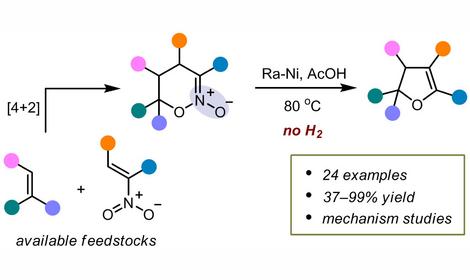
✓ The selective reaction of cyclic aminoperoxides with FeCl2 proceeds through a sequence of O–O and C–C bond cleavages, followed by intramolecular cyclization, yielding functionalized tetrahydrofurans in 44–82% yields. Replacing the peroxyacetal group in the peroxide structure with a peroxyaminal fragment fundamentally alters the reaction pathway.

✓ Forty-five aminoperoxides belonging to bridged azaozonides, bridged N-substituted azaozonides, and tricyclic aminoperoxides were evaluated for in vitro antimalarial activity against Plasmodium falciparum (3D7) and for cytotoxicity against immortalized human normal liver (LO2) and lung (BEAS-2B) cell lines, as well as human liver (HepG2) and lung (A549) cancer cell lines. Seven N-substituted azaozonides exhibited high antimalarial activity against the chloroquine-sensitive 3D7 strain of P. falciparum, with IC50 < 1 μM.

✓ Synthesis of α-sulfonylated ketazines from vinyl azides and sodium sulfinates proceeding via radical C–S/N–N coupling cascade has been developed. The cascade starts from the generation of sulfonyl radicals through RSO2Na oxidation by cerium(IV) ammonium nitrate (CAN). Their addition to the double bond of vinyl azides, followed by N2 elimination, leads to the formation of iminyl radicals, whose N–N coupling provides α-sulfonylated ketazines in yields up to 96%. This process represents one of the rare facets of iminyl radical reactivity, namely, N–N radical coupling while bypassing their reduction, intramolecular cyclization, and 1,n-HAT that are typical for them.

✓ We present a non-orthodox cycloalkene ring expansion reaction involving ozone and O-nucleophiles, which results in the formation of medium-sized peroxycycles. The mechanism is governed by a delicate balance: the cyclic structure of the substrate dictates conformational restrictions in the generated carbonyl oxide intermediate that kinetically retard the rapid [3 + 2] cycloaddition between the carbonyl and carbonyl oxide groups, enabling competitive trapping of the carbonyl oxide intermediate by an external O-nucleophile. Some of the synthesized peroxides exhibit ring-chain tautomerism, existing in either a hydroperoxide or a cyclic peroxy hemiacetal form.

✓ A selective method has been developed for the synthesis of unsymmetrical geminal bisperoxides via the ozonolysis of semicarbazones in a hydroperoxide containing medium. The replacement of the CN moiety by two different peroxide fragments bonded to the same carbon atom in a one-pot process is a step towards solving the complex problem of organic synthesis: geminal difunctionalization with two closely related, but not identical, functional groups.

✓ Contrary to the expected oxidation, Mn(OAc)2 with diacyl peroxides provides C–H functionalization of imidazole N-oxides by an alkyl fragment via a multistep process. The reaction of peroxide with Mn(II) is proposed to generate the catalytic Mn(IV)/Mn(III) species with a noninnocent carboxylate ligand, which is cleaved to afford an alkyl radical and Mn(III) complex. Further addition of an alkyl radical to the C═N bond of imidazole N-oxide and C–H oxidation led to the target product in 23–89% yields.

✓ Electrochemically induced synthesis of O-imido oximes from benzyl azides and N-hydroxyimides via N–O coupling has been discovered. The developed approach reveals a new role of benzyl azides in the practice of organic synthesis as precursors of iminyl radicals for intermolecular coupling reactions. The method is applicable to a wide range on benzyl azides and N-hydroxyimides, and O-imido oximes are obtained in yields up to 94%.

✓ A photocatalytic system based on a heterogeneous TiO2 catalyst and a redox organocatalyst N-hydroxyphthalimide is proposed for the generation of carbon-centered radicals from C(sp3)−H substrates or aldehydes at room temperature under visible light irradiation. The developed approach was successfully applied to the addition of ethers, alkylarenes and aldehydes to azodicarboxylates. Titanium oxide acts as a photocatalyst, producing phthalimide-N-oxyl radicals from N-hydroxyphthalimide, thereby enabling the organocatalytic process in solution. Phthalimide-N-oxyl radicals act as catalytically active species that cleave C−H bonds to form carbon-centered radicals.

✓ We introduced cyclic diacyl peroxides as effective O-electrophiles for cross-coupling with boronic acids, a process that likely proceeds via a Pd(II)/Pd(IV) catalytic cycle. The success of this method can be attributed to the higher oxidative potential of cyclic diacyl peroxides and the ability to avoid the elimination of CO2 in high-valent Pd intermediates. Additionally, the Pd(IV) complex with cyclic diacyl peroxide maintains a ground state singlet spin state with no radical character on the acetate and carboxylate ligands that facilitate the transmetalation step. The reaction produces a variety of aryl esters with an additional carboxylic acid group as a platform for further functionalization.

✓ A ring-opening ω-dithiocarbamylation (or ω-xanthylation) approach based on the unusual intersection of the reactivities of organic peroxides and sulfur-containing nickel complexes is disclosed. The formation of nickel dithiocarbamate or xanthate complexes and their subsequent interaction with alkoxyhydroperoxide was found to play a key role in the formation of C−S coupling products.

✓ A mechanistically and conceptually rich electrochemical approach to the construction of CN-functionalized heterocycles was shown. It applies easily available substrates and uses the symbiosis of anodic oxidation of SCN anion to cyanide and cascade cyclization with Shono-type oxidation of saturated C−N bonds to C=N bonds.

✓ Reaction of xanthates and vinyl azides under the action of Mn(OAc)3 results in the formation of alkoxy thiazoles. In this transformation, potassium xanthate undergoes Mn-mediated oxidation, generating the corresponding xanthyl radical. The latter interacts with the double bond of the vinyl azide, and after N2 elimination, a β-xanthylated iminyl radical is formed. The quenching of the iminyl radical by an Mn(II)-ion with subsequent cyclization into a 5-membered ring, an unexpected elimination of a sulfur-containing fragment and aromatization lead to thiazoles. It is important to mention that cyclization with the formation of a 6-membered ring is not observed in the disclosed process. The obtained thiazoles demonstrate antifungal activity surpassing that of commercially available fungicides.

✓ The cross-dehydrogenative coupling (CDC) of oximes with hydrazones employing KMnO4 as the oxidant was discovered. Presumably, the reaction proceeds through the selective cross-recombination of oxime and hydrazone-derived free radicals, despite the fact that both of them are known to undergo self-coupling and other processes with C–C, C–O, C–N, and N–N bond formation. The synthesized compounds exhibited pronounced fungicidal activity against a wide spectrum of phytopathogenic fungi (Venturia inaequalis, Rhizoctonia solani, Fusarium oxysporum, Fusarium moniliforme, Bipolaris sorokiniana, Sclerotinia sclerotiorum), in some cases surpassing the activity of commercial fungicides triadimefon, kresoxim-methyl, and azoxystrobin. Key factors contributing to the high fungicidal activity were identified as the presence of a small aliphatic substituent at the C–O coupling site and electron-withdrawing substituents in the oxime moiety.

✓ An intermolecular C(sp3)–C(sp3) coupling of ketones with EWG-activated nitriles proceeding via a combination of Knoevenagel condensation of the starting substrates and cathodic reduction of an in situ-formed alkene has been discovered. NH4OAc was used as the base and the electrolyte, and a green solvent, aqueous EtOH, was applied as the medium. A high selectivity of C(sp3)–C(sp3) bond formation was achieved using available glassy carbon as the electrode material.